

How To Keep A Small Pool Clean
With more people planning staycations this summer – sales of Intex pools and inflatable pools have exploded this year.
And along with the big sales, come the big questions, specifically "what chemicals do I need for an inflatable pool", and "how can I keep this kiddie pool clean"?
After answering the question a dozen times on the "What Chemicals are Needed for an Intex Pool" blog post, I thought that the topic deserved it's own post. So, without further ado, here is How to Maintain a Blow-Up Pool (aka kiddie pool, baby pool, inflatable pool).
Keeping an Inflatable Pool Clean
Keeping dirt and debris and other organic contaminants out of your kiddie pool is important to keep the water healthy for swimmers. Pets should not be allowed in an inflatable pool, for several reasons, and keeping wild animals and water fowl out is also important.
Use a Pool Leaf Rake: Pool Leaf Rakes are skim nets that are sewn into a deep bag with a beveled front edge for scooping debris from the bottom. You can find advanced (pool) leaf raking techniques on this post, but for a small kiddie pool, just connect the net to a pool pole and drag it around the surface and push it along the floor. You can also use a Leaf Rake without a pole, skimming by hand. Leaf Rakes are much easier to use than the flat 'dip-n-flip' type of skimmer nets.
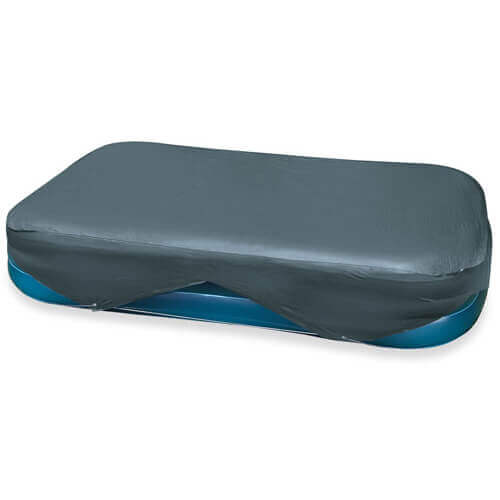
Use a Pool Cover: Some Intex inflatable pools have covers available that cover the pool like a fitted sheet, nice and tight. You could also use a basic tarp, and a few bungees or bricks to hold it in place, or use a small solar cover, and warm the water by letting in the sun, while blocking out leaves, dirt and animals.
Use a Pool Vacuum: Connect a garden hose and a pool pole to the Leaf Gulper and you can venturi vacuum any inflatable pool. There is also a smaller version available, contained in the Intex Pool Maintenance Kit. Another route is to use a rechargeable, battery-operated vacuum like the Intex Handheld Vacuum, or the PoolBlaster SpaVac.
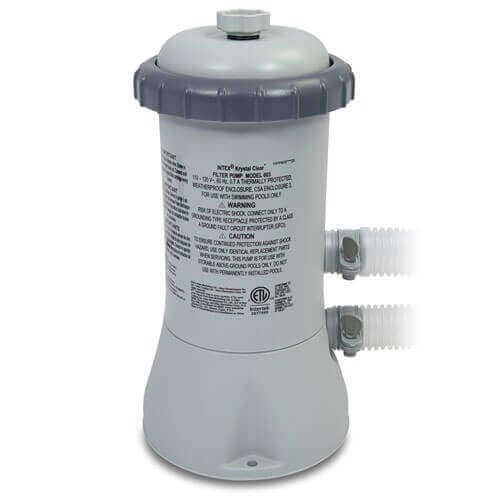 Use a Pool Filter: Inflatable pools are not sold with filters, but that does not mean that you cannot use one. Small Intex Cartridge Filters include 6′ hoses that can be draped over the edge of the pool and held down below water level with ankle weights or a small sand bag. Do not use the pool while running the filter, to prevent suction entrapment on the intake hose.
Keeping an Inflatable Pool Sanitary
Without a pool filter to remove small particulate matter, the water can get funky fast! Filters do not sanitize or disinfect pool water, but by removing contaminants, they make it easier for your sanitizer to control algae and bacteria.
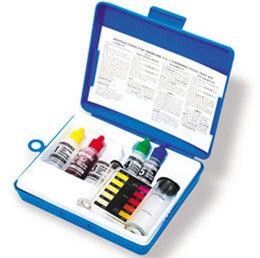 Keep pH Level in Range: You will need a small test kit, or test strips so that you can test the pH level in the water, which can naturally rise from pool use. When pH gets too high, chlorine becomes only half-effective, and algae and bacteria blooms more easily. When pH levels rise above 7.6, add 0.2 oz of dry acid, for each 100 gallons of pool water, and recheck the pH level in a few hours. 7.2 – 7.4 is the best range.
Using Chlorine Tablets: The best way to obtain a consistent and constant chlorine level in the pool is to use 1″ tabs or 3″ tablets, in a floating chlorinator, aka chlorine floater. Most inflatable pools need just half of one 3″ tablet per week, or several 1″ tabs at a time, replaced promptly when they dissolve, but your test kit will tell you for sure. Use enough tablets to give a consistent 2.0 – 3.0 ppm level of chlorine.
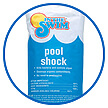 Shocking an Inflatable Pool: Once per week, or if chlorine level accidentally drops to near zero, or if the water was contaminated with animals or party-animals, boost the chlorine level high with 0.2 oz of Pool Shock per 100 gallons of water. You can also use unscented bleach, using 2.0 oz per 100 gallons of water. Be careful to seal-up opened bags of Pool Shock, clipping them tightly and storing in a plastic Tupperware type bowl.
It should also be mentioned that pool users should bathe before using the small pool, and younger children not yet potty trained should have a fresh diaper change and wear a swim diaper. Even very small amounts of fecal matter in such a small pool can overwhelm sanitation methods.
Draining & Refilling an Inflatable Pool
Some of the nicer, full-featured inflatable pools include a drain plug to make regular draining and refilling easier. Just remove the plug and drain, or connect a garden hose if you want to avoid erosion or over-saturation.
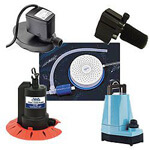 If you don't have a drain plug in your kiddie pool, but you have a nearby hillside, you could use a garden hose to siphon most of the water out, to a point where you can flip it over to empty fully. An easier method would be one of our small submersible pumps.
Even though you may do all of these things above; testing and adjusting pH level, keeping a constant chlorine level, and maybe even filtering the water, there comes a time when you should drain the pool and start over.
For most inflatable pools or plastic kiddie pools following my guidelines above, the water should still be changed every two weeks. If you are not adding chlorine to kill bacteria, the pool should be drained every other day. Stagnant water without chlorine, can become unhealthy water in just 24-48 hours.
Thanks for Reading!

Mark Garcia
InTheSwim Staff Blogger
How To Keep A Small Pool Clean
Source: https://blog.intheswim.com/how-to-maintain-an-inflatable-kiddie-pool/
Posted by: ridingwhisextephy.blogspot.com
0 Response to "How To Keep A Small Pool Clean"
Post a Comment